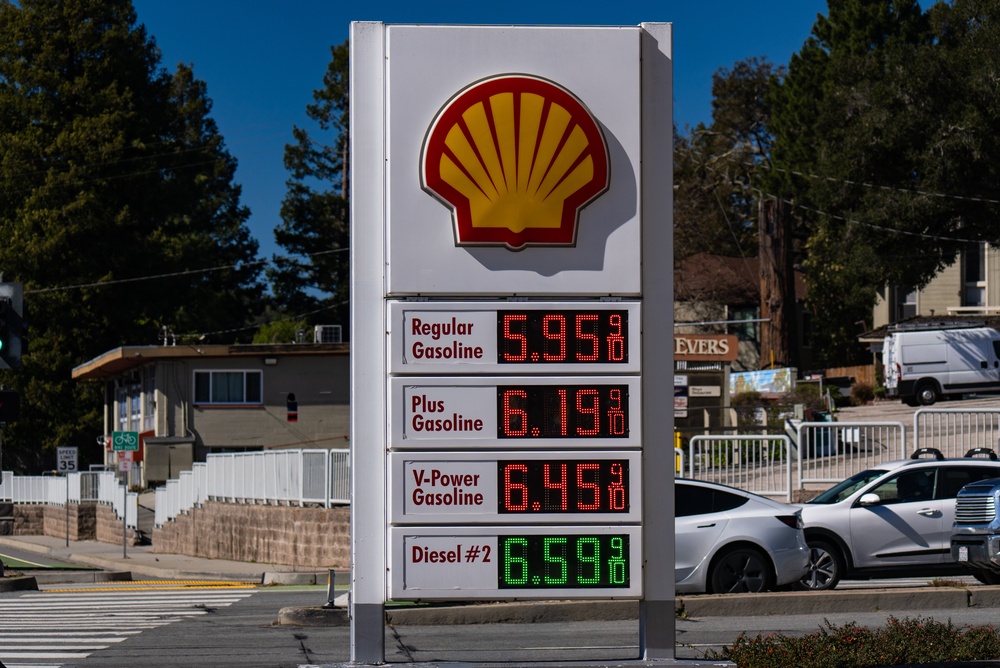
As gas prices continue to rise because of the war with Iran, the political pressure in Washington is growing. President Trump and several Republican lawmakers are pushing for a temporary federal gas tax holiday to give Americans some relief, while critics on both sides of the aisle are attacking the administration over rising energy costs. At the same time, anti-war voices are becoming louder among Democrats and even some Republicans, many of whom are arguing that the economic price of confronting Iran is simply too high.
But for those of us who care deeply about the safety and survival of the Jewish people in the Holy Land, this is not a theoretical political debate. Iran has spent decades funding terror, threatening Israel openly, and destabilizing the Middle East. Allowing the Iranian regime to grow stronger because Americans are frustrated at the gas pump would be shortsighted and dangerous. No one enjoys paying higher prices, but many Americans understand that confronting a regime committed to Israel’s destruction is sometimes necessary. President Trump has repeatedly said that once the conflict is resolved and stability returns to the region, oil and gas prices will fall sharply again.
Leadership means seeing beyond today’s headlines and understanding the larger stakes. History has shown that weakness toward hostile regimes often creates bigger and more expensive crises later. Americans naturally want lower prices and economic stability, but they also want strength, security, and allies they can count on. Israel is fighting a war it did not seek against an enemy that has threatened its existence for generations. Supporting that fight—even during economic discomfort—is not only strategically wise. For many of us, it is morally necessary.